Parking at an apartment building is easy to ignore until it becomes the thing residents complain about every week. The garage feels like a fixed asset: concrete, gates, numbered bays. In practice it behaves like a small business inside your property, with its own demand curve, operating costs, enforcement burden, and revenue potential that rarely shows up clearly on the rent roll.
Property managers, regional operators, and asset owners who treat parking as an afterthought usually discover the gap in one of three ways. A new EV charger install blows the maintenance budget. Guest parking turns into daily conflict. A rent renewal conversation derails because the resident thinks the garage fee is arbitrary compared to the public lot two blocks away.
This guide is a working playbook for pricing parking at multifamily properties: how to calculate what you must recover, how to structure tiers residents understand, how to read occupancy before you change numbers, and how Ronspot helps you enforce fair access once the rate card is set.
Free Parking Policy Template
Permits, guest rules, enforcement steps, and resident communications in one editable document.
Why parking price is a property strategy, not a line item
Garage revenue rarely rivals apartment rent, but it shapes retention, daily satisfaction, and whether your NOI reflects real operating cost. Underpriced parking subsidises car ownership across the whole building. Overpriced parking pushes renewals toward competitors who unbundle more cleanly.
Three structural forces make pricing a recurring decision rather than a one-time setup:
Scarcity. Urban and inner-suburban buildings often have fewer bays than households with vehicles. Suburban surface lots may have the opposite problem: abundant empty asphalt while covered decks stay full on winter weekdays.
Mixed demand. Residents, staff, contractors, delivery vehicles, and guests compete for the same inventory unless price and policy separate them deliberately. Without that separation, paying residents feel cheated when visitor bays become long-stay storage.
Real operating cost. Garages and surface lots need insurance, lighting, cleaning, line painting, gate repair, snow removal, pest control, and periodic capital work. EV infrastructure adds hardware amortisation and energy recovery questions on top.
According to hybrid work statistics, flexible work patterns continue to reshape when people are home and when they drive. Multifamily garages that assumed five-day commuting rhythms are seeing flatter weekday demand and sharper weekend peaks. Pricing and policy need to follow measured occupancy, not assumptions from 2019.
Step 1: Build your cost floor before you look at comps
Competitor garage rates tell you what the market might accept. They do not tell you whether your structure breaks even or drains net operating income.
Start with an annual cost stack. Split fixed and variable where you can; property accounting varies, but the logic holds across portfolios:
Fixed and semi-fixed costs: property insurance allocation, structural maintenance, gate and access systems, security contracts, property tax share attributed to garage square footage, management software, and administrative labour for permits and violations.
Variable upkeep: cleaning, snow removal, lighting repairs, re-striping, elevator maintenance in deck structures, and pest control in enclosed garages.
Capital reserve: resurfacing cycles, charger installs, lift modernisation, drainage repairs, and camera upgrades. Spread expected capex over a planning horizon so monthly pricing reflects future liability, not just this year’s invoice.
Divide total annual garage cost by occupied bays, not nominal capacity. If forty bays in a rear surface lot never get permitted because residents prefer the deck, your cost floor should reflect the deck inventory you actually sell, or you should consciously price the rear lot to pull demand.
Worked example: a 120-bay garage costing €84,000 per year to operate, with 110 bays actively permitted, implies roughly €64 per bay per month before any return on the asset. That number is your floor conversation with asset management: anything below it is a subsidy from rent.
Only after the floor is documented should you layer market positioning. A premium downtown deck with valet-adjacent access can sit materially above floor. A suburban surface lot might price at floor plus a modest margin, or remain bundled into rent if car-free households are the majority and simplicity matters for leasing.
Step 2: Map every space type in your inventory
A single monthly rate across the garage ignores how residents actually value bays. Before you set numbers, classify inventory:
- Standard uncovered – highest volume, lowest convenience, base tier anchor
- Covered or deck – weather protection and shorter walk to lobby
- Reserved assigned – same bay every day; premium for predictability
- Compact or tandem – discounted where access is shared or awkward
- EV-enabled – energy cost plus hardware and maintenance amortisation
- Visitor or transient – hourly, nightly, or event blocks separate from resident permits
- Accessible – reserved at standard resident rate; never surcharged for disability access
- Staff or contractor – often internal chargeback rather than resident pricing
Draw a simple map. Count each category. Note peak fill by day and season: move-in weekends, Sunday nights, holiday travel patterns, local university calendars if you have student leases.
Pricing without this map produces the classic failure mode: premium rates on rows residents treat as overflow, or underpriced covered decks that fill first while surface bays sit empty.
Step 3: Choose pricing structures residents can understand
You do not need a dozen models. Most multifamily portfolios succeed with one primary resident structure and one guest model, documented on a single rate card page.
Unbundled monthly permits
Parking appears as a separate lease line item. Households without cars pay lower base rent; drivers choose a tier. Transparency improves renewal conversations because vehicle cost is visible instead of buried in “rent includes parking” language that car-free residents resent.
Included allowance with paid upgrades
One standard permit per unit is included or available at a nominal fee. Additional vehicles, reserved bays, or EV spots cost extra. Works when most units have zero or one car and you want leasing simplicity at the point of sale.
Credit-based access for scarce inventory
When prime bays or peak days are contested, flat assignment creates parking hogging dynamics familiar from corporate garages: the same households monopolise the best rows. Ronspot’s credit model limits how many high-demand days each permit holder can book, spreading access without banning second cars outright. Credits work equally well when a building converts assigned bays to bookable inventory.
Guest and transient pricing
Visitor blocks priced hourly or nightly recover capacity residents would otherwise give away informally. Clear guest rules reduce tow threats and front-desk arguments. Pair fees with self-service registration so enforcement is data-backed, not confrontational.
Waitlist and overflow pricing
When standard tier stays full, a transparent waitlist signals underpricing or undersupply. Some operators introduce a lower “overflow” tier in a farther lot rather than raising standard rates for everyone. Others raise standard tier and publish the waitlist time-to-assign metric in asset reports.
Pick one resident model and one guest model. Complexity is where spreadsheets fail and resentment grows.
Step 4: Build your rate card in four working sessions
Skip the forty-page consultant deck. A regional manager can produce a defensible rate card in a week with four focused sessions:
Session 1 – Costs and comparables. Finalise cost floor. Collect three nearby garage rates: peer apartment buildings, public garages, and commercial lots that set resident expectations. Note what each includes (24-hour access, in/out privileges, EV, guest passes).
Session 2 – Tier spreads. Set standard, covered, and reserved prices. Keep spreads consistent: reserved might sit at 1.3–1.5× standard in the same structure; EV at standard plus documented energy surcharge; compact/tandem at 0.7–0.85× standard where access friction is real.
Session 3 – Legal and lease review. Confirm rent-control caps, disclosure requirements, and whether parking fees must be optional or itemised at lease signing in your jurisdiction. Involve counsel when converting bundled parking to unbundled mid-lease.
Session 4 – Resident FAQ draft. One page: what changes, effective date, how to switch tiers, how guests register, how to cancel or downgrade, and who to contact before renewal.
Pilot new rates on one building or one garage level for ninety days before portfolio-wide rollout. Pilots surface complaint patterns early and give asset teams occupancy proof instead of projection slides.
Step 5: Read occupancy signals before you raise rates
Property managers hear extremes: one resident insists the garage is always full, another says it is empty every Tuesday. Data settles the argument.
Track at minimum:
- Fill rate by day of week – if Friday runs near capacity and Tuesday sits half empty, time-based or tiered pricing may fit better than a blunt increase across all bays
- Permit waitlist length and time-to-assign – persistent waitlists mean standard tier is underpriced or inventory is short
- Guest bay turnover and overstay rate – guest spots occupied by the same unregistered plates weekly mean resident pricing is too low relative to convenience
- No-show rate on assigned bays – assigned inventory that sits empty suggests bookable or auto-release models recover capacity
- Revenue per bay versus cost floor – simple ratio for asset reviews
A consistently full garage with a waitlist is a signal to raise standard tier, convert unused visitor inventory, or add overflow capacity. Low occupancy after an increase may mean willingness-to-pay was crossed, not that residents reject parking fees on principle. Separate price resistance from enforcement frustration: raising rates before fixing guest chaos makes paying residents feel cheated.
Gartner workplace predictions for 2025 emphasise experience and fairness in resource allocation across physical workplaces. Multifamily garages are no different: residents accept fees when the process feels predictable.
Step 6: Price EV charging as its own economics
EV bays are not “standard plus a plug.” Hardware, demand charges, idle fees, and maintenance change the unit economics.
Separate line items residents understand:
- Monthly EV bay rent – covers space premium and hardware amortisation
- Energy pass-through or per-kWh fee – tied to meter or network reporting where available
- Idle policy – fee or booking release when charging completes, so bays turn over
If EV rent stays at standard garage rate while energy is free, non-EV households subsidise plug-in neighbours and charger rollout becomes politically harder. Publish how fees map to cost recovery when residents ask.
Step 7: Communicate changes without renewal shock
Residents accept fair pricing when logic is visible. They resist surprises attached to lease renewal with no prior notice.
Practical communication habits:
- Announce changes sixty to ninety days ahead for existing tenants where contracts allow
- Lead with what stays the same: accessible bays, guest hour windows, grandfather period for current permit holders
- Offer a downgrade path (reserved to standard) before forcing a rent-package increase
- Publish the rate card in the resident portal, not only in lease PDF attachments
- Pair fee changes with a service improvement when possible: online guest registration, better lighting, marked EV bays, or clearer signage
CIPD guidance on flexible working highlights how policy changes land better when employees understand rationale and boundaries. Residents respond the same way: explain why the garage fee exists, what it funds, and how to opt out or downgrade.
Common pricing mistakes that undo good math
Bundling parking invisibly into rent hides true cost and encourages every household to keep a car “because it is included.”
One price for tandem and single bays invites conflict when two households share access but pay the same as a solo driver in a wide spot.
Raising rates before fixing enforcement makes paying residents feel cheated while unpermitted vehicles still occupy premium rows. A solid parking policy guide aligned with your rate card closes that gap.
Ignoring second-car households without a tier encourages permit sharing and informal arrangements that audits cannot see.
Setting EV at standard rate slows charger rollout and frustrates drivers who wait for bays occupied by non-charging vehicles.
Copying competitor rates without cost floor math produces portfolios that look market-aligned on paper but leak NOI on garages with older structures or higher insurance.
Running enforcement on spreadsheets breaks at scale. Manual lists go stale, guest passes expire silently, and property managers spend hours reconciling violations instead of managing assets.
Ronspot’s approach to apartment and multifamily parking
Ronspot was built for workplaces where demand exceeds supply and fairness matters as much as utilisation. Multifamily garages face the same physics with different labels: permits instead of employee badges, residents instead of desk workers, asset managers instead of facilities directors.
Our view is simple: fair allocation comes before fair price. If enforcement feels arbitrary, any rate feels unfair. If booking is easy and releases are automatic, residents tolerate tier spreads and guest fees because the system behaves predictably.
From assigned chaos to bookable inventory
Many buildings inherit assigned bays from legacy leases. Assigned inventory often shows high no-show rates: residents keep rights to bays they use three days a week while neighbours hunt for space. Ronspot lets operators convert bays to bookable inventory with rules by group, floor, or building wing. Residents reserve the days they need; unused capacity returns to the pool through auto-release when check-in does not occur.
That shift can recover double-digit percentage capacity without pouring concrete, similar to gains corporate campuses see when moving from assigned to shared parking. Our guide on increasing office parking efficiency documents the same mechanics in workplace language; the underlying math applies directly to residential garages.
Credits for contested prime inventory
When covered rows or elevator-adjacent bays are scarce, unlimited booking privileges recreate hogging dynamics. Ronspot’s credit system caps high-demand bookings per household per month while keeping same-day and next-day booking lightweight. Property managers set credit rules in the admin panel; residents see remaining balance in the app. No hallway negotiations about who “owns” row three.
Guest parking that property managers do not have to police manually
Guest conflict is a pricing problem disguised as a courtesy problem. If guests are free and unregistered, resident-paid bays feel undervalued. Ronspot guest flows let visitors register from a link, receive time-bound access, and expire automatically. Front desk staff spend less time on clipboards; enforcement records exist when overstays happen.
Groups, zones, and portfolio scale
Regional operators manage multiple buildings with different lease structures. Ronspot groups map to property, wing, tenant type, or staff category. SSO and directory sync reduce onboarding admin when hundreds of residents rotate annually. For day-to-day operations, Ronspot admin panel tips cover the workflows property teams use most: permit batches, guest overrides, occupancy exports, and rule changes without developer tickets.
Occupancy data asset managers actually use
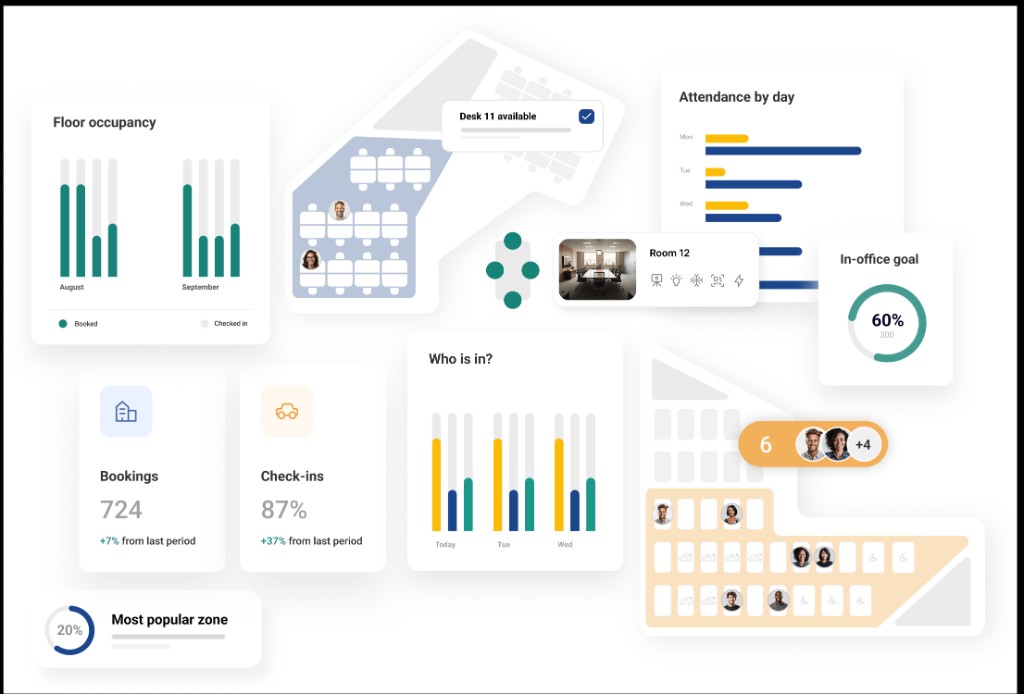
Pricing reviews should not rely on garage manager intuition alone. Ronspot reporting shows fill patterns, no-show rates, guest usage, and zone-level trends exportable for quarterly asset conversations. Tie fee increases to charts residents never see but asset committees do: waitlist length down after tier adjustment, guest overstay rate down after registration launch.
Our 2026 workplace statistics and benchmarks report shows how occupancy data is reshaping space decisions across sectors; multifamily is increasingly part of that same conversation as garages become P&L lines rather than amenity checkboxes.
Security and resident data
Parking systems hold names, unit associations, vehicle registrations, and guest visit patterns. Ronspot maintains ISO 27001 recertification with data hosted in Ireland under AWS. For procurement and resident committee questions, that certification matters as much as feature checklists.
Automation that removes admin drag
Property teams drowning in permit changes benefit from the same automations corporate facilities teams use. Our overview of 18 built-in workplace automations applies to multifamily: auto-release, reminder notifications, guest expiry, and rule-based allocation reduce the manual hours that make parking feel like a second job for site staff.
How Ronspot compares to spreadsheets and legacy tools
Spreadsheets work until move-in season. Then duplicate permit numbers, expired guest lists, and conflicting assignments appear faster than staff can reconcile. Legacy tools built for single corporate carparks often lack guest self-service, credit rules, or portfolio dashboards multifamily operators need.
Ronspot combines resident mobile booking, admin rules, guest registration, and analytics in one platform. Buildings that also run flex amenities or staff hot-desking can extend the same account to desks and meeting rooms where relevant; product evolution highlights show where the platform is heading for operators managing mixed-use inventory.
Annual pricing review calendar
Treat garage fees like insurance: annual review, documented assumptions, incremental adjustments rather than rare shocks.
Each year, revisit cost floor inputs, compare fill rates to prior year, scan competitor moves, and reconcile EV energy recovery. Align fee changes with capex timelines so residents connect price moves to tangible garage improvements.
McKinsey research on people and organisational operating models stresses measuring outcomes, not activity. For parking, that means tracking revenue per bay, cost recovery ratio, and complaint volume alongside raw occupancy.
Frequently Asked Questions
Should apartment parking be included in rent or billed separately?
Separate billing is usually clearer when fewer than four in five units need a bay. Unbundling lets car-free households pay less and makes garage revenue visible on the P&L. Include parking in rent only when every unit genuinely needs equal access or local law requires bundling.
How much should a reserved spot cost above standard?
A common starting spread is twenty-five to fifty percent above standard for a fixed assigned bay in the same garage. Reserved pricing above that range should come with tangible benefit: closest to elevator, EV plug, or covered deck.
Can we charge for guest parking without upsetting residents?
Yes, if guest rules are simple and registration is easy. Free short windows plus a daily cap for overnight guests balance hospitality with abuse prevention. Residents tolerate guest fees when unregistered vehicles stop occupying visitor bays for days.
What if our garage is never full?
Avoid raising standard rates until you understand why bays sit empty: remote work patterns, safety perception, poor signage, or too much assigned inventory sitting unused. Convert assigned bays to bookable, discount compact tiers, or partner on off-peak transient use before cutting base rent packages.
How do we price parking during lease-up?
Lease-up often mixes resident permits with contractor and staging demand. Publish temporary contractor tiers and keep resident standard tier stable. Use pilot pricing on overflow lots until stabilisation occupancy clarifies long-term demand.
Does parking software replace on-site enforcement?
No. Software handles registration, booking, and evidence. Staff or contractors still execute tow policy and physical patrols where required. The win is fewer manual lists and defensible records when violations occur.
Can Ronspot work for portfolios with several buildings?
Yes. Zones and groups map per property; reporting rolls up for regional asset reviews. SSO and bulk import support annual resident turnover without rebuilding permit lists from scratch.