The best help desk software in 2026:
- Ronspot
- Zendesk
- Freshdesk
- Jira Service Management
- ServiceNow
- Freshservice
- Zoho Desk
- Help Scout
- HubSpot Service Hub
- HAPPYFOX
- Spiceworks Help Desk
- UnSpot
Most help desk software guides assume every ticket starts with a broken laptop or a password reset. In hybrid offices, a large share of employee frustration never reaches IT at all. It shows up as “I could not book a desk”, “my parking spot was taken”, or “the room I reserved was occupied”.
Those are workplace operations problems dressed up as support requests. Facilities and workplace teams inherit the queue whether or not they run a formal help desk.
This list covers both layers: platforms that prevent workplace tickets through self-service booking and automations, and tools that manage IT and facilities queues when something genuinely needs a human owner.
The 12 best help desk software in 2026
1. Ronspot
We list Ronspot first because the highest-volume “help desk” in many hybrid offices is not IT. It is desks, rooms and parking failing before the employee starts work.
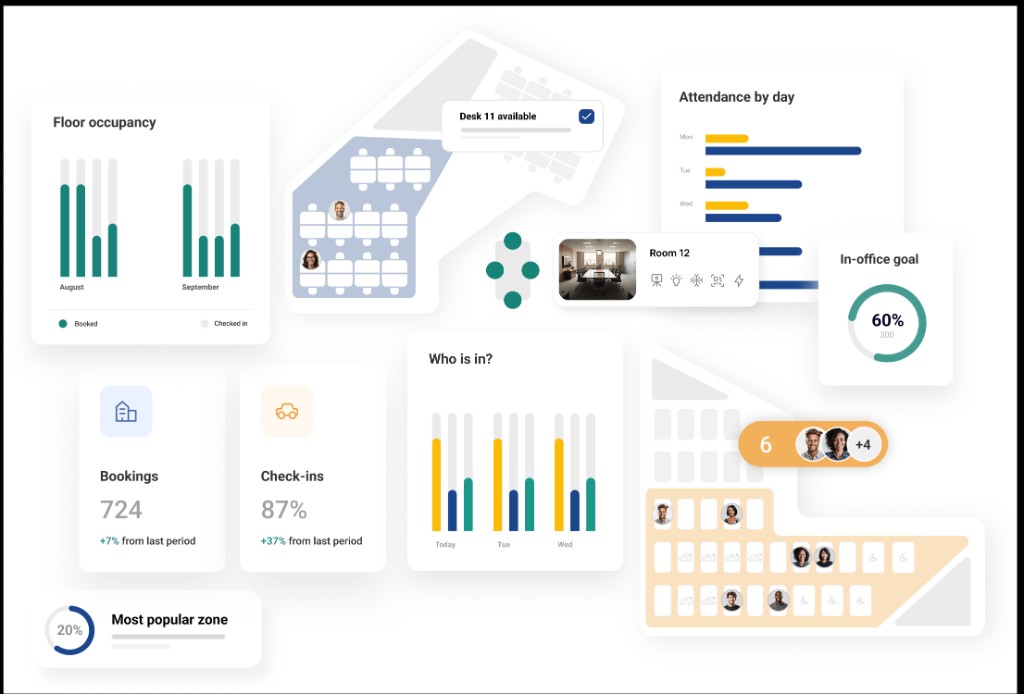
Ronspot is a workplace management platform that cuts that queue at the source. Employees book desks, meeting rooms and parking in one flow. Facilities teams set rules once: priorities, waitlists, auto-release when someone does not confirm, and reporting that shows what was actually used.
When booking works, ticket volume drops. When it does not, every broken reservation becomes an email to reception, a Slack ping to HR, or a walk-up at the facilities desk.
Ronspot also gives admins automations that replace manual fixes: releasing ghost bookings, managing parking credits, and applying consistent policies across sites. That is help desk work removed before it becomes a ticket.
- Desks, rooms and parking in one self-service journey
- Automations that reduce manual facilities admin
- ISO 27001 certification maintained since 2020 for enterprise review
- Multi-site admin with occupancy data facilities and IT can both trust
2. Zendesk
Zendesk is the default IT and customer support help desk for many mid-market and enterprise teams. Ticketing, macros, SLAs, knowledge base and omnichannel routing are mature and widely understood.
It fits when the brief is classic support: track issues, assign owners, measure response times, deflect repeat questions through a help centre. It does not replace workplace booking, but it handles the queue when something escalates beyond self-service.
- Ticketing and SLAs for structured support teams
- Knowledge base for deflection and repeat-issue reduction
- Large integration marketplace for CRM and chat tools
3. Freshdesk
Freshdesk targets teams that want Zendesk-class ticketing with a faster setup path and transparent tiered pricing. SMB and mid-market IT teams often start here when support volume outgrows shared inboxes.
The product covers email, chat and phone channels with automation rules that route tickets by category or priority. Workplace booking stays outside Freshdesk unless you integrate a separate platform.
- Multi-channel ticketing with automation rules
- Self-service portal for common requests
- Reporting on agent workload and resolution times
4. Jira Service Management
Jira Service Management (JSM) fits organisations already on Atlassian: dev teams in Jira, docs in Confluence, support in the same identity stack. IT, HR and facilities can run separate queues with shared reporting.
JSM is strong when change management and incident workflows need to connect to engineering backlogs. Hybrid workplace requests can live in a facilities project if you model them deliberately.
- Deep Jira integration for engineering-linked support
- SLA tracking and escalation paths
- Assets and CMDB options at higher tiers
5. ServiceNow
ServiceNow is the enterprise service management layer for large organisations that need ITSM, HR cases, facilities requests and custom workflows on one platform. Implementation depth matches the scope.
Workplace teams in global enterprises sometimes route facilities tickets through ServiceNow while employees book desks elsewhere. The help desk story is unified; the booking layer may still be a separate purchase.
- Enterprise ITSM with broad workflow customization
- Facilities and HR service catalogues on one platform
- Audit and compliance features for regulated industries
6. Freshservice
Freshservice is Freshworks’ ITSM-focused product: asset management, incident/problem/change processes, and employee self-service in an ITIL-shaped package.
It suits IT departments formalising support after outgrowing a shared inbox. Workplace booking is not native, but facilities tickets for access, equipment and moves can run through Freshservice workflows.
- ITIL-aligned incident and change workflows
- Asset discovery and inventory tracking
- Employee self-service portal for IT requests
7. Zoho Desk
Zoho Desk fits teams already in the Zoho ecosystem (CRM, Mail, Projects) that want help desk tooling without adding another vendor relationship. Context from CRM records flows into tickets naturally.
Pricing stays accessible for growing teams. The trade-off is depth versus ServiceNow or JSM in complex enterprise ITSM scenarios.
- CRM-linked tickets for customer and internal support
- Workflow automation and SLA management
- Knowledge base and community forum options
8. Help Scout
Help Scout prioritises human-readable support over heavy ITSM process. Shared inboxes, lightweight workflows and clean email-first UX suit customer support and internal help teams that find Zendesk overly complex.
Internal workplace teams sometimes use Help Scout for facilities email queues before adopting full ITSM. Booking still needs a dedicated workplace platform upstream.
- Shared inbox model with collision detection
- Docs knowledge base for self-service
- Reporting focused on response quality, not ticket volume alone
9. HubSpot Service Hub
HubSpot Service Hub connects support tickets to CRM and marketing data. It fits revenue teams that want one HubSpot stack from lead to customer success.
For internal IT help desks it is less common, but operations teams already on HubSpot sometimes run lightweight internal queues here. Workplace resource booking remains a separate system.
- CRM-native ticketing and customer history
- Automation tied to HubSpot workflows
- Knowledge base and customer feedback surveys
10. HAPPYFOX
HAPPYFOX offers multi-channel ticketing with strong automation and SLA tooling at mid-market price points. IT and operations teams use it when they need structure without ServiceNow-scale implementation.
Categorisation and routing rules help split IT incidents from facilities requests if admins configure queues deliberately.
- Ticket automation and canned actions
- SLA timers and escalation alerts
- Self-service knowledge base for repeat questions
11. Spiceworks Help Desk
Spiceworks Help Desk is a free entry point for small IT teams monitoring tickets, inventory and basic network discovery in one community-driven ecosystem.
It suits very small offices formalising support for the first time. Enterprise hybrid workplaces with multi-site booking complexity typically outgrow it quickly.
- Free cloud help desk tier for small IT teams
- Inventory and network tooling in the broader Spiceworks suite
- Community peer support for SMB IT admins
12. UnSpot
UnSpot bundles desk and room booking with an internal help desk module for facilities-style tickets: broken equipment, maintenance requests, HVAC issues. That combination is rare in workplace platforms.
It fits teams that want booking and a basic ticketing queue in one vendor interface. Parking depth, enterprise security documentation and unified desk-room-parking analytics are areas where buyers often compare UnSpot against Ronspot before deciding.
- Desk and room booking plus internal ticketing
- Schedule planning and workspace analytics in one product
- QR check-in and iPad room displays on supported setups
Two help desks, one building: IT queue vs workplace queue
Most organisations accidentally run two help desks. IT owns passwords, devices and access provisioning. Facilities and workplace teams own desks, rooms, parking, moves and “something is wrong on my floor” messages that never get logged.
Classic help desk software (Zendesk, Freshservice, ServiceNow) excels at the IT queue. It was not built to stop employees from needing a desk in the first place.
Workplace management software (Ronspot) excels at the upstream layer: self-service booking, fair allocation, auto-release and admin automations that prevent the ticket from existing.
The mistake is buying only one layer and wondering why volume never drops. If employees email reception because they cannot park, a ticketing tool records the pain. It does not remove the cause.
According to Gartner’s 2025 workplace predictions for CHROs, employee experience and space utilisation stay tightly linked to how organisations run hybrid policy. Help desk strategy should include workplace self-service, not only ticket routing.
What to route where in a hybrid office
Send to Ronspot (prevention and self-service): desk availability, room booking, parking allocation, waitlists, ghost booking release, multi-site policy rules, utilisation reporting for leadership.
Send to IT help desk (Zendesk, JSM, Freshservice): device failures, account lockouts, VPN issues, software installs, security incidents.
Send to facilities or workplace queue (ServiceNow, UnSpot module, or shared inbox): broken furniture, HVAC complaints, access cards, office moves, cleaning requests after booking data shows a real occupancy problem.
Integration between layers matters. When IT and facilities share identity through SSO, employees see fewer portals. When booking and ticketing stay disconnected, admins reconcile conflicts manually.
Our guide on 18 workplace automations shows how much facilities admin can leave the queue entirely when rules run in the booking platform.
How we think about help desk volume in hybrid workplaces
We built Ronspot because the busiest help desk in hybrid offices is often invisible. It is the hallway conversation, the Teams message, the “can you fix my desk booking?” loop that never becomes a formal ticket.
Help desk software should measure resolution time for real incidents. Workplace software should reduce incident count by making desks, rooms and parking work without intervention.
If your evaluation starts from ticket volume, ask what percentage is workplace-related. If the answer is high, shortlist Ronspot alongside ITSM tools, not instead of them.
Pair this list with our admin panel guide to see how facilities teams run day-to-day operations without a ticket per booking exception.
When you are ready to see how Ronspot fits your stack, book a free demo.
Frequently Asked Questions (FAQs)
What is the best help desk software in 2026?
It depends on the queue. Zendesk and Freshdesk lead for IT and customer support ticketing. ServiceNow and Jira Service Management fit enterprise ITSM. Ronspot leads for preventing workplace support issues through desk, room and parking self-service in hybrid offices.
Is Ronspot help desk software?
Ronspot is workplace management software, not a traditional IT ticketing tool. It reduces help desk volume by letting employees book desks, rooms and parking self-service, with automations that replace manual facilities fixes. Many teams use Ronspot alongside Zendesk or Freshservice for IT incidents.
Can help desk software manage desk booking requests?
Most IT help desk tools can log desk-related tickets, but they do not natively manage floor plans, parking allocation or booking rules. Workplace platforms like Ronspot handle booking upstream so those tickets never open.
What is the difference between ITSM and workplace help desk tools?
ITSM tools (ServiceNow, Freshservice, JSM) manage incidents, changes and assets for IT teams. Workplace tools (Ronspot, UnSpot) manage space booking and occupancy. Hybrid offices usually need both layers, integrated through SSO where possible.
How do we reduce facilities help desk tickets in hybrid offices?
Give employees self-service booking for desks, rooms and parking, auto-release unconfirmed reservations, publish clear policies, and use occupancy data to adjust floor capacity before complaints spike.
Which help desk software is best for small IT teams?
Spiceworks Help Desk and Freshdesk offer accessible entry points. For workplace booking at the same time, evaluate Ronspot or UnSpot depending on whether you need deep parking allocation or a bundled basic ticketing module.