Returning to the office is not about mandates, it is about meaning. Forcing people back rarely supports long-term retention or loyalty, but building a better workplace does.
During the pandemic, the number of people working remotely surged to approximately half to two-thirds of the global workforce, highlighting a significant shift towards remote work arrangements as organizations adapted to changing employee needs.
Since then, 76% of enterprises said they have introduced some form of return-to-office (RTO) policy. However, despite having policies, 41% of companies admitted they found it difficult to enforce RTO expectations without clear, real-time data [CBRE]
As more companies try to increase office attendance again, how to encourage employees back has become a major challenge for Facility Management and HR teams alike.
Today, the companies thriving in hybrid work aren’t forcing people back. They’re creating office experiences that employees want to return to. Spaces that support productivity, collaboration, and human connection.
In this post, we’ll break down 9 practical, people-first strategies to inspire employees to reconnect with the workplace, not because they’re told to, but because they choose to.
Facility managers are at the heart of this transformation. You are the bridge between operational excellence and employee experience. Creating spaces that work better for people, while delivering measurable business value, is where real impact happens.
Free Workplace Management Audit Template
Audit template to help you diagnose workplace pain points
Understanding Hybrid Work
Understanding Hybrid Work
Hybrid work arrangements can vary widely. Some companies may require employees to be in the office for certain days or hours, while others may allow employees to choose their own schedules. This approach not only supports employee autonomy but also helps companies optimize their office space and resources.
The rise of hybrid work has been driven by its numerous benefits. For employees, it offers the flexibility to work in environments where they feel most productive, whether that’s at home or in the office. For companies, hybrid work can lead to increased productivity, improved employee satisfaction, and reduced overhead costs associated with maintaining large office spaces.
In essence, hybrid work represents a shift toward a more adaptable and employee-centric model where outcomes matter more than physical presence.
Today, the companies thriving in hybrid work aren’t forcing people back. They’re creating office experiences that employees want to return to. Spaces that support productivity, collaboration, and human connection.
Office Mandates: Do They Work?
Office Mandates: Do They Work?
Office mandates, also known as return-to-office mandates, require employees to work from the office for a set number of days or hours per week. These mandates are often introduced to increase collaboration, strengthen culture, and improve coordination.
However, the effectiveness of office mandates is a topic of debate. While some business leaders believe that in-office work is essential for maintaining company culture and driving business outcomes, many employees prefer the flexibility and autonomy that remote work offers. This preference can lead to resistance and decreased morale if mandates are perceived as rigid or unnecessary.
Enforcing office mandates can also be challenging, especially in companies with a significant number of remote workers. Tracking attendance and ensuring compliance can become cumbersome, potentially leading to friction between management and employees.
Ultimately, the success of office mandates depends on how they are communicated and implemented. Companies that involve employees in the decision-making process and provide clear reasons for the mandates are more likely to see positive outcomes. Flexibility and understanding are key to balancing the benefits of in-person work with the advantages of remote work.
In this post, we’ll break down 9 practical, people-first strategies to inspire employees to reconnect with the workplace, not because they’re told to, but because they choose to.
1. Start with 'Why', Make the Purpose Clear
1. Start with “Why”, Make the Purpose Clear
A hybrid policy without a clear “why” is doomed to fail.
Employees need to understand not just what is being asked of them, but why it matters, to their career growth, their team connections, and their day-to-day work satisfaction.
Some companies require employees to be in the office for at least three days a week as part of their hybrid working policy.
Stat to know: 65% of companies in Europe said office attendance either increased or stayed steady over the past year where purpose-driven communication was used (CBRE Europe, 2024).
Facility managers can partner with HR and leadership teams to embed these messages into the workplace itself: through signage, space design, event programming, and onboarding communications.
Tip: Use real stories from your team, not corporate jargon, to show the value of being together.
2. Create a Workplace Worth Coming Back To
2. Create a Workplace Worth Coming Back To
You can’t lure people back to a sea of gray cubicles.
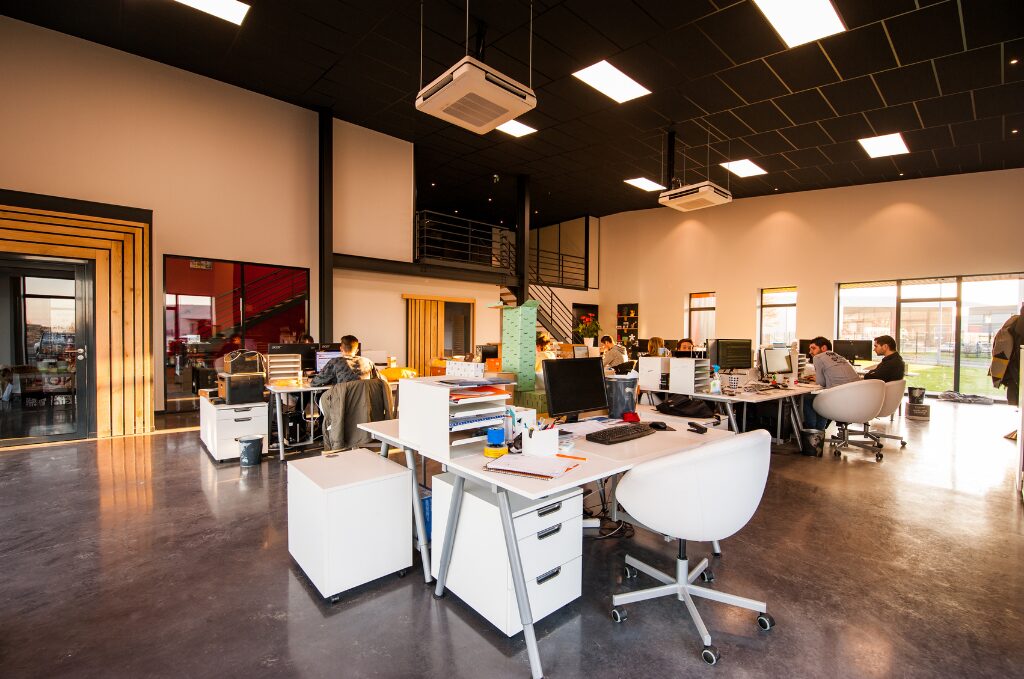
Employers play a crucial role in creating workplaces that employees want to return to. Today’s employees expect the workplace to match, or exceed, the functionality and comfort of their home offices.
Key Elements Facility Managers Should Focus On:
- Zoning: Designate spaces for focus, collaboration, social interaction, and wellness as part of a thoughtful space planning strategy that reflects how employees actually use the office..
- Comfort: Invest in ergonomic furniture, natural light, temperature control, and acoustic management.
- Technology: Equip rooms with plug-and-play tech that supports hybrid meetings.
Example: GSK’s new offices feature flexible work zones, wellness amenities, and seamless technology integration to match the rhythm of hybrid work (WorkDesign, 2022).
Tip: Start with high-impact, low-cost upgrades like better communal spaces or adding more meeting pods.
3. Embrace Flexibility, Hybrid is Here to Stay
3. Embrace Flexibility, Hybrid is Here to Stay
Rigid mandates don’t align with how people want to work today. Instead, the most successful workplace strategies offer choice and flexibility, while ensuring collaboration and culture are still prioritized.
Stat to know: 91% of European organizations and 85% of U.S. companies have adopted hybrid work as the norm (JLL, 2024).
Facility managers can support flexibility by:
- Enabling real-time booking for desks, rooms, and parking.
- Creating multi-functional spaces that can adapt to different team needs.
- Offering “flex days” where teams are encouraged, not mandated, to be in together.
Tip: Focus on team-based in-office days to rebuild connection without forcing attendance.
4. Bring the Fun, Make the Office Social Again
4. Bring the Fun, Make the Office Social Again

After years of remote work, many employees crave human connection.
Facility and workplace teams can play a huge role by designing experiences that encourage organic interactions, boost employee engagement, creativity, and fun.
Ideas to Activate Your Office:
- Lunch & learns
- Innovation hackathons
- Wellness days (yoga, meditation, chair massages)
- Pop-up cafes or food truck visits
Insight: Harvard Business Review (2022) found that making the office more social was one of the top ways to naturally increase in-office attendance.
Tip: Build a “heartbeat” of small, frequent events rather than occasional big ones.
5. Offer Amenities that Show You Care
5. Offer Amenities That Show You Care
It’s not about “perks” for the sake of perks. It’s about reducing daily friction and making employees’ lives easier.
Critical Amenities Employees Value:
- Easy, reliable parking (especially dynamic systems linked to attendance)
- Secure bike storage and showers
- Healthy food options
- Quiet rooms for focus or prayer
- EV charging stations
Stat to know: 61% of companies prioritize high-quality food and beverage options when selecting new office spaces (CBRE Europe, 2024).
Tip: Audit your building amenities. Which ones are outdated? Which ones could make a real difference?
6. Fix the Friction Points
6. Fix the Friction Points
Small frustrations add up, and they can overshadow even the best workplace design, leading to lower productivity and inefficient workplace operations.
Common Friction Points to Address:
- “No desk available” stress (solution: desk booking with live availability)
- Parking confusion (solution: parking booking solution with fair credit allocation so no first-come-first-serve chaos. Integrate with license plate recognition and access control systems to remove all friction points)
- Long security lines (solution: integrated access control)
- Tech problems in meeting rooms (solution: simple meeting room systems that allow employees to book directly from the platforms they already use, like Outlook)
Stat to know: 87% of companies say access to easy transportation and parking is a top driver of office location decisions (CBRE Americas, 2024).
Tip: Walk the building from an employee’s perspective. Where would you get frustrated?
7. Prioritize New Hires and Early Careers
7. Prioritize New Hires and Early Careers

New employees don’t just need a desk, they need connection.
Facility managers can help by:
- Designing “welcome” spaces for new hires.
- Creating visible hubs for mentorship programs.
- Facilitating easy access to training rooms, collaborative spaces, and social areas.
The chief executive can significantly influence the onboarding experience and company culture for new hires by advocating for policies that promote in-person interactions and mentorship opportunities.
Insight: Companies that provided structured, in-person onboarding reported 22% higher new-hire retention after one year (Envoy, 2024).
Tip: Tie onboarding to space experience, not just digital HR platforms.
8. Listen and Adapt
8. Listen and Adapt
No workplace strategy should be set in stone, especially in hybrid working arrangements.
Facility managers should adjust strategy based on real usage patterns and employee feedback.
Practical Ways to Adapt:
- Quarterly utilization audits (desks, rooms, parking)
- Monthly employee pulse surveys
- Open feedback channels for day-to-day suggestions
Example: Companies that adjusted hybrid policies based on feedback saw office utilization rise by 14% in six months (Ronspot Workplace Pulse, 2025).
Tip: Celebrate improvements visibly. Show employees their feedback drives action.
9. Lead by Example
9. Lead by Example
Leadership presence shapes culture and can significantly influence whether employees choose to return to the office.
Facility teams can encourage leaders to:
- Work in visible spaces, not behind closed doors.
- Host regular open office hours.
- Participate in workplace events.
Tip: Encourage leadership to view in-office presence not as “compliance,” but as community building.
Measuring Success and Feedback
Measuring Success and Feedback
Measuring the success of hybrid work arrangements is essential if companies want to improve attendance without damaging trust. The most useful scorecard combines employee sentiment, productivity indicators, utilisation trends, and manager-level feedback.
Employee satisfaction surveys can provide insights into how employees feel about the hybrid work model, highlighting areas of success and identifying potential issues. Engagement surveys can measure how connected and motivated employees feel, which is essential for maintaining a positive work environment.
Productivity metrics, such as project completion rates and performance evaluations, can help companies understand how hybrid work affects overall productivity. Additionally, regular feedback from managers and employees can provide valuable information on the day-to-day experiences of working in a hybrid model.
By reviewing these metrics consistently, companies can make informed policy adjustments instead of reacting to short-term noise. This iterative approach keeps hybrid work aligned with both employee needs and business goals.
The Role of HR in Hybrid Work
The Role of HR in Hybrid Work
HR plays a critical role in implementing and sustaining hybrid work arrangements. As the bridge between employees and leadership, HR teams define clear policy expectations, role responsibilities, and communication standards so employees understand how hybrid work operates in practice.
Communication is key in a hybrid work setting. HR can facilitate seamless communication and collaboration between remote and in-office workers by leveraging technology and creating opportunities for interaction. This helps maintain a cohesive company culture and ensures that all employees feel connected and valued, regardless of their work location.
Moreover, HR is instrumental in providing support and resources to remote workers. This includes ensuring they have the necessary tools and technology to perform their jobs effectively and addressing any challenges they may face. By doing so, HR helps create a supportive and inclusive work environment that fosters productivity and employee satisfaction.
In a hybrid model, HR’s role extends beyond traditional policy ownership. It includes proactively supporting remote workers, improving manager capability, and ensuring hybrid strategy works for both employees and the business.
HR and Facility Management should work in close partnership on RTO plans. HR may define the policy, but Facility Management ensures the office has the capacity, layout, and resources needed to deliver a strong in-person experience.
Conclusion
Conclusion
The workplace isn’t just where work happens. It’s where culture, collaboration, and innovation come to life.
As facility managers, you have a powerful opportunity to shape that future.
By focusing on flexibility, experience, community, and smarter operations, you can turn the office from a mandate into a magnet.
Ready to start?
Choose two areas from this list that resonate most with your team. Pilot them. Measure the impact. Adjust. Grow.
Because the best workplaces of 2026 are not the ones employees are forced into. They are the ones they are drawn to, by choice.
Book a Demo with Ronspot and see how your team can improve office attendance through better workplace experience, not mandates.
Where Ronspot helps: Ronspot gives Facility and Workplace teams one operational layer for desk booking, room scheduling, parking allocation, and workplace analytics. That means fewer daily friction points for employees, better visibility for managers, and a clearer path to improving office attendance through experience rather than enforcement.
See how Ronspot can solve your specific workplace challenges.