The introduction of hybrid working has been a huge success for companies worldwide. So much so, that flexible and remote jobs are receiving 7 times more applications than in-person only roles (CNBC). This highlights the difficulty that companies face to encourage employees back into the office. What exactly can you do to encourage a return to the office and why do companies value in-person time so much? We will take a look at this in a bit more detail below.
The challenge is not only getting people through the door. It is making office days feel worth the commute: a desk ready on arrival, rooms booked without email chains, and visibility into who is on site for the collaboration leaders want to protect.
What is a workplace experience app?
Firstly, we must understand the key topic of this article, what is a workplace experience app?
A workplace experience app is a comprehensive software solution that aims to provide a centralized platform for employees to access the tools and resources they need to be productive, engaged, and happy in the workplace.
An app like this offers a plethora of features, ranging from communication and collaboration tools, task management, employee engagement and recognition, benefits and perks management, performance tracking and feedback, desk booking and resource management, wellness and mental health support, and company news and updates.
Ronspot sits in this category for hybrid workplaces: one employee app for desks, meeting rooms, and parking, with admin tools and analytics on the back end so operations teams run the building rather than chase spreadsheets.
What is the purpose of a workplace experience app?
Now we understand what a workplace experience app is, we must understand its purpose. In most cases, these apps are used to help businesses attract and retain talent, increase employee satisfaction, and boost overall workplace operations.
In today’s fast-paced and constantly evolving business landscape, it’s more important than ever to provide employees with a work environment that meets their needs and helps them be successful. A workplace experience app is designed to do just that. With hybrid and remote working becoming hugely popular, companies are finding it challenging to encourage employees back to work. So, apps like these can help make that process a little bit easier.
Purpose-built workplace apps replace fragmented tools. Instead of one system for desks, another for rooms, and a third for visitor or parking access, employees open a single interface that matches how they actually plan an office day.
Encouraging Employees to Return to the office
As mentioned above, companies are finding it challenging to have employees to return to the office. The freedom and time savings of remote working has become the norm over the past 2-3 years.
However, companies have noticed that in-person collaboration can be extremely beneficial for their teams. Therefore, will the office become a hub for collaboration? It remains to be seen – but for now, companies want employees to return in some fashion.
In this process, how can a workplace experience app help companies? Well, simply put, a workplace experience app can encourage employees back to the office by providing them with an improved and more personalized office experience. Using features like:
- Desk Booking: Employees can book a desk or meeting room in advance, ensuring that they have a suitable workspace when they come into the office.
- Office Amenities: The app can provide information about office amenities, such as on-site cafes, vending machines, and other facilities, making the office a more attractive place to work.
- Community Building: The app can foster a sense of community by providing employees with a platform for connecting with each other, sharing ideas, and participating in virtual events and activities.
- Personalization: The app can be personalized to meet the specific needs and preferences of individual employees, making the office experience more enjoyable and efficient.
By improving the office experience and making it more convenient and enjoyable for employees, a workplace experience app can help companies encourage employees to return to the office and participate in in-person collaboration.
Friction kills return-to-office momentum. When booking a desk takes longer than the commute savings, employees stay home. A strong experience app removes that friction before the policy conversation even starts.
5 Benefits of a Desk Booking System
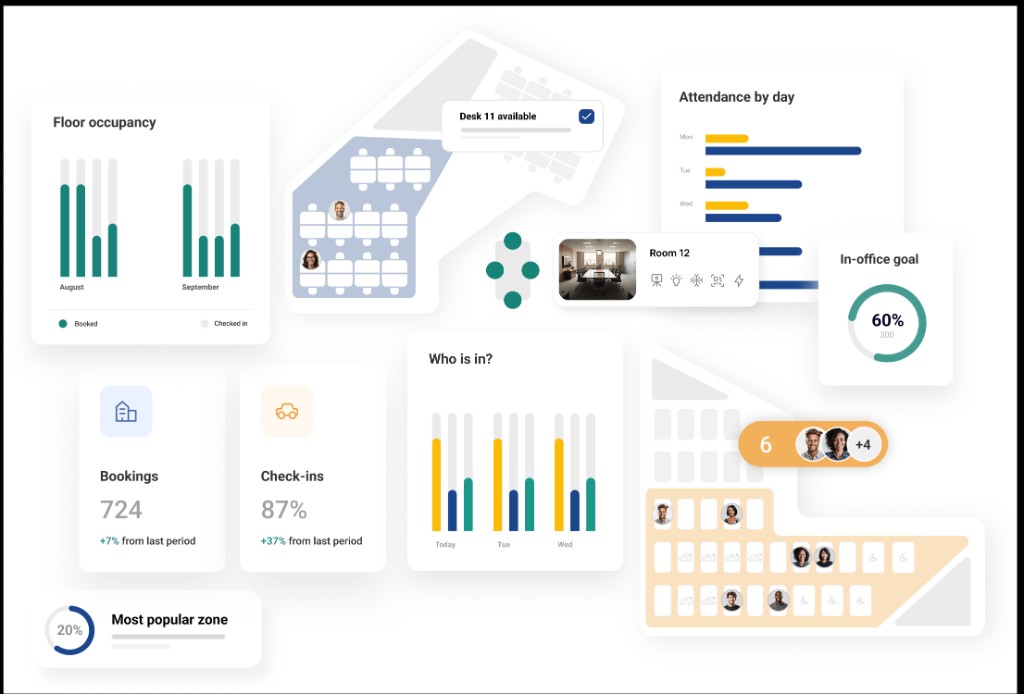
One of the key components of a workplace experience app is a desk booking system. This system allows employees to reserve workspaces, desks, or meeting rooms for a specific time and date, making it easier for them to manage their work environment and ensure they have the resources they need to be productive.
For example, if an employee needs a meeting room or conference room with specific requirements, like a projector or smart whiteboard, they can quickly find and book this resource. Moreover, they can invite colleagues to the meeting directly from the app, and with a calendar sync, can have it placed into their Google or Outlook Calendars.
The desk booking system can be an important aspect when it comes to a workplace analytics app. For companies, they can see the value in the following benefits:
1. Improved Space Management
With a desk booking system, businesses can manage their office space and resources more efficiently. These systems reduce the risk of overbooking and ensuring that all employees have access to the resources they need to be productive. Conversely, the system will help identify when spaces are not being booked. Using this occupancy report, companies can make decisions around their real-estate commitments. The system provides real-time availability and booking information, making it easy for employees to see which resources are available and when.
Live floor maps and utilisation trends help facilities teams right-size neighbourhoods before lease renewals, not after empty desks become obvious.
2. Increased Productivity
By eliminating the need for manual booking procedures and reducing the hassle of searching for an available workspace, a desk booking system can help increase overall productivity by giving employees more time to focus on their work.
Employees spend office time on work, not on hunting for a free desk or negotiating with colleagues over room availability.
3. Customizable Rules and Policies
Desk booking systems offer customizable booking rules and policies, allowing businesses to set specific parameters for booking and use of their resources. This helps ensure that everyone is on the same page and that resources are used in a way that supports the business’s goals and objectives. It also reduces administration for the company. Less stress, more success.
Credit limits, team zones, and anchor-day rules replace informal politics about who gets which desk on busy mornings.
4. Mobile Accessibility
Many desk booking systems are designed to be accessible from mobile devices, making it easier for employees to reserve resources and manage their work environment from anywhere. This is especially important for businesses with remote or mobile employees who need to be able to book resources on-the-go.
Mobile booking fits hybrid rhythms: reserve Tuesday’s desk from the train on Monday evening, cancel if plans change, and release the spot for a colleague.
5. Better Collaboration
By integrating with other scheduling and communication tools, a desk booking system can help employees work more efficiently and effectively. This reduces the risk of misunderstandings and missed deadlines and helps teams collaborate more effectively.
Calendar sync means desk and room reservations sit alongside meetings in Outlook or Google Calendar, so schedules stay aligned without duplicate entry.
Why choose a workplace experience app?
We understand that a workplace experience app is designed to create a centralized system for improving employees productivity, happiness, and ensure they feel engaged in the workplace. So, why should a company onboard a workplace experience app?
Well, in addition to the desk booking system, a workplace experience app may also offer other features designed to improve the work environment and enhance the overall experience for employees. These features may include communication and collaboration tools, task management, employee engagement and recognition, benefits and perks management, and wellness and mental health support.
For example, communication and collaboration tools can help employees work together more effectively, regardless of where they are located. Task management and project planning tools can help teams stay organized and on track, while employee engagement and recognition features can help businesses keep their employees motivated and engaged.
Platforms like Ronspot focus on the operational core first: desks, rooms, parking, check-in, and reporting. That foundation supports return-to-office programmes without bolting on features employees perceive as surveillance.
Some considerations
In creating a centralised system, it is important to consider the feelings of your team. Some features of a workplace experience app may appear intrusive to employees. Features like productivity tracking can frustrate employees. The idea of having a ‘Big Brother’ watching employees activity can be interpreted as a lack of trust. So, be mindful of this when implementing a workplace experience app.
Roll out booking and visibility features with clear communication. Explain what data is collected, who sees it, and how it improves fairness (desk access, room availability) rather than monitoring keystrokes at home.
Conclusion
In conclusion, a workplace experience app is a powerful tool that can help businesses of all sizes improve their work environment and enhance the overall experience for employees. Encouraging employees to return to the office will inevitably come with its challenges. However, with a carefully curated plan and the help of a workplace analytics app, you can make this office return happen smoothly. As always, a space booking system, be it for desks, meeting rooms, or parking spaces can be extremely beneficial in aiding the return to the office.
Book a demo to see how Ronspot brings desk, room, and parking booking into one workplace experience for your teams.